

Amanda Sherrell
People can look at a woman lying quietly beneath the trees and assume she is resting, when in truth she may be trying not to come apart.
There is a certain kind of grief that does not come dressed the way people expect it to.
- It does not always look like tears at a funeral.
- It does not always sound like sobbing in a bedroom.
- It does not always arrive as stillness, or sadness, or even silence.
Sometimes grief comes as panic. Then sometimes it comes as exhaustion. Whereas other times it comes at 1 AM, when the world is dark and quiet and your body finally stops long enough for your soul to remember what it is carrying.
And then sometimes, if we are honest, grief comes so tangled up with trauma, stress, fear, responsibility, and survival that by the time it reaches the surface, it no longer even resembles what people think grief is supposed to look like.
That is where I have been.
Lately I have found myself trying to process not only the loss of my Daddy, but also the deep and sudden upheaval of everything my life has looked like over the last month and a half. And if I am honest, I think part of what has made this season so difficult is that grief did not come to me in a neat or recognizable form. It came layered. It came interrupted. It came under pressure.
It came complicated.
Today I am writing this while lying in a hammock in the woods, trying to catch my breath in the only way I know how — by listening to the trees, the wind, and the stillness that only God can make. And as I lay here, I find myself thinking about how easily people can look at someone from the outside and assume they know how that person is doing.
They see that you are still functioning.
Still speaking.
Still posting.
Still showing up.
Still making decisions.
Still moving.
And because they do not see tears every hour of the day, they quietly assume you must not be grieving all that deeply.
But that is not true.
I have cried.
I have grieved.
I have panicked.
I have felt it in my chest, in my stomach, in the strange nighttime waves that come when the adrenaline wears off and my mind can no longer outrun what my heart is trying to process.
That, too, is grief.
And for some of us, especially those who have been through prolonged stress or trauma, grief does not always come out in soft, visible tears. Sometimes it comes out as complex grieving. Sometimes it comes out as anxiety, panic attacks, brain fog, insomnia, numbness, hypervigilance, and the inability to settle into your own life again after everything has changed.
And everything has changed.
When Dexter got the call for his liver transplant, we never expected it to happen that fast.
He had only been on the transplant list for around three months here in Georgia, and around six months in New York City. We thought we might have more time. We thought there would be more warning. More preparation. More emotional runway.
There wasn’t.
The call came, and just like that, everything stopped.
Everything we were doing.
Everything we were planning.
Everything normal.
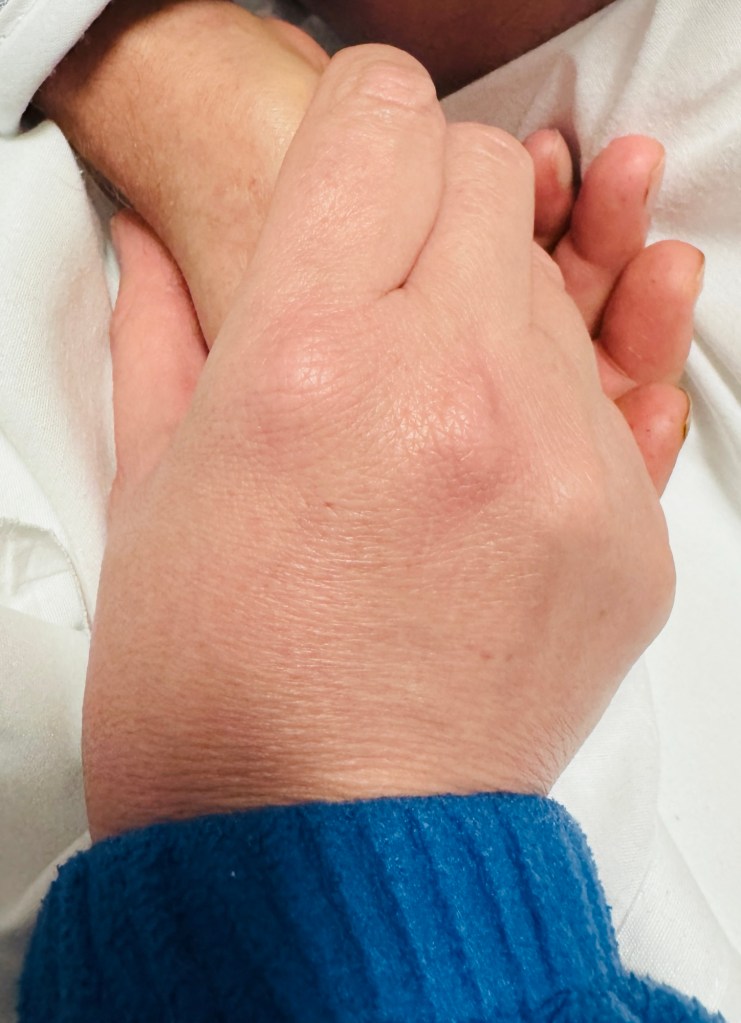
For the next month, our lives and livelihood were effectively put on hold while we entered into one of the most intense and fragile seasons we have ever walked through. And anyone who has ever lived through a medical crisis knows this kind of reality well: life narrows very quickly. The world becomes waiting rooms, phone calls, medications, numbers, paperwork, fear, hope, setbacks, and prayer.
So while I was trying to hold my breath through Dexter’s transplant and recovery, life was already demanding more from my nervous system than it had left to give.
And then grief entered the room too.
Not politely.
Not one sorrow at a time.
But all at once.

1986
The loss of my Daddy.
The emotional strain surrounding a family member.
The abrupt interruption of normal life.
The weight of uncertainty.
The caregiving.
The fear.
The fatigue.
The responsibility.
The silent pressure of trying to remain functional while your internal world is splitting at the seams. And this is what people often do not understand:
- Sometimes grief does not get to happen in a safe, quiet room.
- Sometimes grief has to happen while you are still in crisis.
- Sometimes you do not get the luxury of “stopping to process.”
- Sometimes you have to keep making decisions while your heart is breaking.
- Sometimes you have to keep answering questions while your mind is overloaded.
- Sometimes you have to keep moving while part of you is still trying to understand what has even happened.
That kind of grief is complicated because it does not get a clean place to land.
It gets delayed.
Fragmented.
Interrupted.
Buried beneath adrenaline.
Hidden under responsibility.
Forced into the margins of late nights and private moments and quiet woods and bathroom floors and car rides and whispered prayers.
And then, later, people wonder why you are “not over it.”
As though grief were a straight line.
As though sorrow were tidy.
As though the human soul could be rushed simply because the calendar has moved on.
But grief does not follow the calendar.
It follows love.
And where love has been deep, grief often travels deep as well.
That does not mean something is wrong with you.
It does not mean you are weak.
It does not mean you are dramatic.
And it does not mean you are failing spiritually.
It means you are human.
There is a dangerous misunderstanding, especially in faith spaces, that if we are trusting God properly, our grief should somehow appear cleaner than everyone else’s. More composed. More polished. More inspirational.
But Scripture does not support that.
The people God loved most often grieved deeply.
David grieved.
Jeremiah grieved.
Job grieved.
Even Jesus wept.
And not one of those realities made them less faithful.
If anything, grief reveals where love has lived, where dependence on God must deepen, and where the soul is being asked to survive something it never wanted to learn how to carry.
That is where I have been.
Not faithless.
Not unaffected.
Not cold.
Not “doing better than it looks.”
Just carrying more than most people can see. And maybe that is why I felt led to write this today, because I know I am not the only one.
Some of you are grieving in ways no one around you would recognize.
Some of you are still going to work while your heart is shattered.
Some of you are caregiving through heartbreak.
Some of you are waking up in the middle of the night with panic and not understanding why.
Some of you are still in survival mode and have not yet had the chance to fully feel what your body already knows has happened.
And if that is you, I want to say this gently:
- Your grief is still grief, even if it does not look the way others expected it to.
- If it comes in waves, it is grief.
- If it comes at midnight, it is grief.
- If it comes as exhaustion, fear, numbness, panic, forgetfulness, or silence, it is grief.
- If it comes slowly because your body has had to protect you in order to survive, it is still grief.
And God sees it.
He sees the version of sorrow that never makes it into words.
He sees the tears that only come in private.
He sees the trembling that follows the phone calls, the hospital rooms, the funerals, the paperwork, the memories, and the empty spaces left behind by people we loved.
He sees the storm inside the person everyone else thinks is “holding up so well.”
And perhaps that is what peace in the storm really is.
Not the absence of sorrow.
Not the absence of fear.
Not the miracle of never breaking.
But the quiet, sustaining presence of God in the middle of all of it.
A peace that does not erase the storm, but sits with us in it.
A peace that does not shame us for grieving differently.
A peace that stays, even when our hearts are too tired to explain themselves.
Right now, I am still learning what this kind of grief looks like in my own life.
I am still learning how to breathe through it.
How to pray through it.
How to rest through it.
How to stop judging myself for not grieving in a way that looks more recognizable to others.
And perhaps that is where healing begins. Not, in pretending the storm is over, but in telling the truth about how fierce it has been.
So if you are in that place too and if your grief is complicated, delayed, private, messy, or hard to explain. I want you to know that you are not failing.
You are surviving.
And sometimes surviving with God is holier than pretending you are untouched.
Closing Prayer
Lord,
For every person reading this who is carrying grief that feels tangled, delayed, hidden, or too heavy to name, I ask that You would meet them in the middle of it.
Meet them in the midnight hours.
Meet them in the panic.
Meet them in the numbness.
Meet them in the silence.
Meet them in the places where they have felt unseen, misunderstood, or ashamed of how their grief has shown up.
Remind them that sorrow does not make them weak.
Remind them that survival does not make them faithless.
Remind them that You are near to the brokenhearted and faithful in every storm.
And Lord, for those of us still learning how to carry both love and loss at the same time, hold us gently.
Teach us how to breathe again.
Teach us how to rest.
Teach us how to trust You in the waves.
Be our peace in the storm.
In Jesus’ name,
Amen.
If this piece spoke to you—if it gave words to something you’ve been quietly carrying—would you consider supporting my work through Buy Me a Coffee? Every post I write comes from real moments, real experiences, and real time poured out to encourage others, and your support helps me continue showing up in this space, even in the middle of life’s storms. Your kindness, whether through a tip or a simple share, makes more of these conversations possible than you know. ❤️

 Country Girl Gone City
Leave a comment