
“Take care of yourself.”
It’s the first thing people say when they find out you’re a caregiver—and quite honestly, it’s the last thing they help you understand.
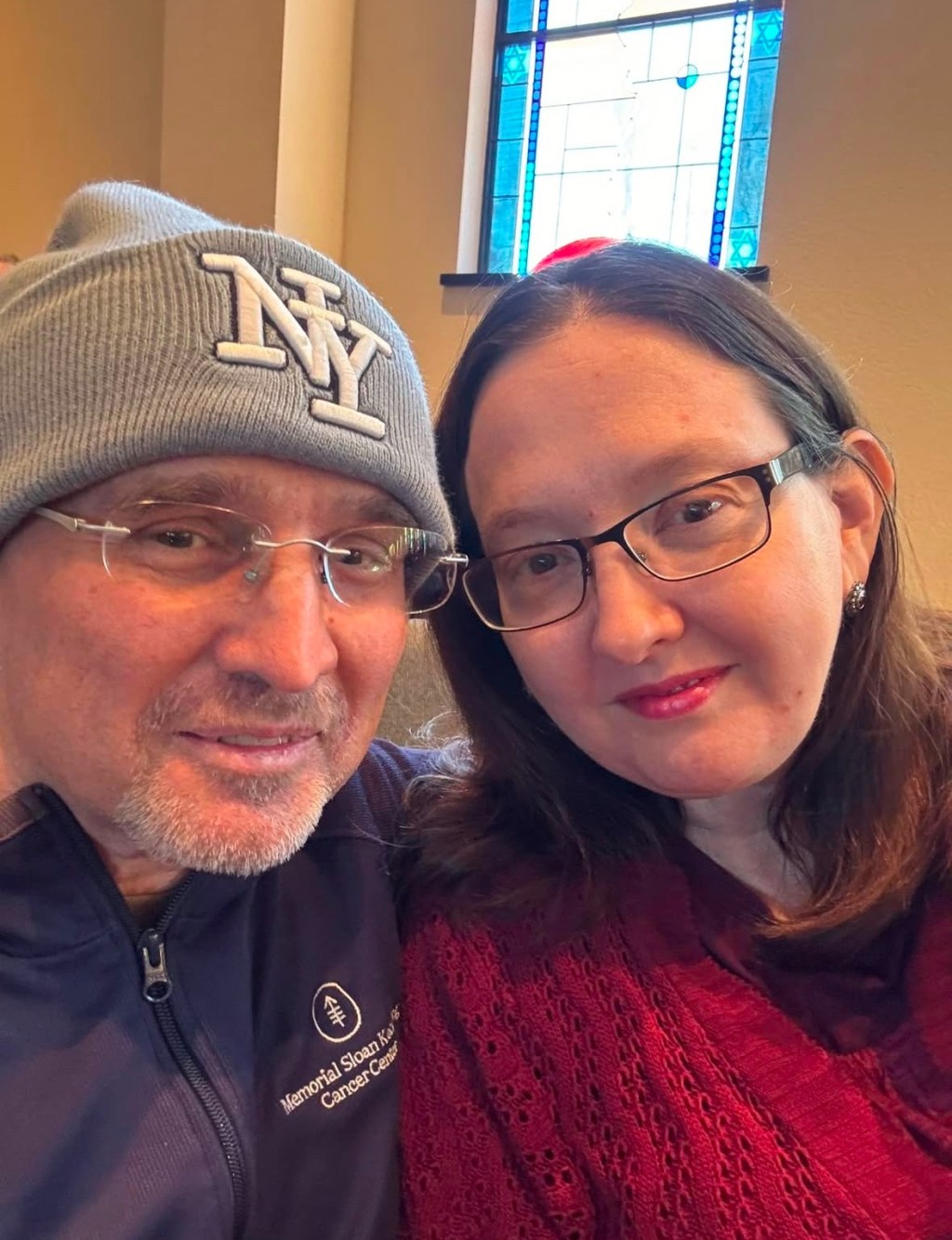
When my husband Dexter was diagnosed in 2019 with Fanconi Anemia, a rare and complicated genetic disorder that predisposes individuals to multiple types of cancer, I was thrown into a world of appointments, treatments, fear, hope, and exhaustion. What I wasn’t prepared for was the endless, and often contradictory, advice I received.
“Be there for your husband 24/7!”
“You have to take care of yourself!”
The pressure and guilt from hearing both at once were overwhelming. I was spiraling—losing myself in emotional overload, confused by everyone’s well-meaning but draining words. It wasn’t until I stumbled across Alison and Sean Breininger and their heartfelt journey on the Negative Space Blog that I began to see the path forward.
Learning What “Taking Care of Yourself” Really Means
Alison once wrote,
“Taking care of yourself doesn’t mean spa days or vacations—it means learning to listen to your body and your soul, and honoring your most basic needs with consistency.”
Those words stopped me in my tracks. I realized I’d been conditioned to believe that “self-care” meant luxury. But the truth is—self-care is survival.
As someone who grew up in privilege, I had always been taken care of. My parents shielded me from many hardships. We had nice homes, businesses, and even a limousine. My needs were met before I even realized I had them. When I met Dexter in 2000, he was a humble, hardworking welder raising his son on his own. When he asked my dad for my hand in marriage, my dad replied,
“Are you sure? You really don’t know what you’re getting yourself into, do you?”
Truth is, none of us do.
The Transformation From Protected to Provider
Over our 25-year marriage, I’ve gone from someone who barely knew how to manage a household to a woman of many roles—wife, mother, caregiver, business owner, ministry partner, artist, author, student, teacher, and now even songwriter. Not because life made it easy—but because life demanded growth. And I answered.
I learned, sometimes the hard way, that the only way to survive the caregiving journey is to care for the caregiver—you.
Psychology Today emphasizes:
“Self-care is not a selfish act—it is an essential one. It is only by caring for ourselves that we can best care for others.”
(Psychology Today, “What Self-Care Is—and What It Isn’t,” 2021)
A Biblical Perspective on Servanthood and Self-Care
Being a caregiver has shown me the beauty of Christ-like servanthood—but also the necessity of rest.
“Come to me, all you who are weary and burdened, and I will give you rest.” – Matthew 11:28 (NIV)
“Do you not know that your body is a temple of the Holy Spirit… Therefore honor God with your bodies.” – 1 Corinthians 6:19–20
You can’t pour from an empty vessel. And God never called us to burn out to prove our love. Even Jesus withdrew to quiet places (Luke 5:16) to rest and pray. If the Son of God needed space, how much more do we?
Cutting Out the Naysayers
Healing began when I turned down the volume on outside opinions and started tuning in to God’s voice and my own needs. I learned to listen to the small things that bring joy: painting, journaling, writing, sitting with a hot cup of coffee in silence. I returned to myself.
Basic things like eating well, dressing in a way that makes me feel confident, showering even on the hard days—these were once tasks I neglected, thinking it was selfish. But now I know: these acts are sacred.
“Let all that you do be done in love.” – 1 Corinthians 16:14
That includes how we treat ourselves.
In Summary
Being a caregiver means carrying the weight of another’s pain while still trying to stay upright yourself. It means loving deeply and sacrificing fiercely. But it does not mean disappearing into the shadows.
I thank God for the experiences that taught me this, especially through my time at Lee University and Maryville University, which helped me unearth my own strength and identity. I wasn’t born to be weak or silent. I wasn’t born to be a follower. I was born to lead, with love, with faith, and with humility.
And that leadership begins with self-awareness and self-respect—yes, even when caregiving.
If this message encouraged you, please consider supporting my writing and caregiving journey by leaving a tip on Buy Me A Coffee. Your kindness helps me continue to share, inspire, and create. 💛

 Country Girl Gone City
Leave a comment